
Hair Restoration
Male Pattern Baldness: What Causes It?
Male pattern baldness is the most common cause of hair loss in men, affecting millions worldwide. Although it often develops gradually, many men first notice subtle changes such as a receding hairline, increased shedding, or thinning near the crown of the head.
For some, these changes begin in their twenties or thirties. Others may not notice significant thinning until much later in life. The rate of progression also varies from person to person.
While hair loss is a natural part of aging for many men, understanding why it happens can help you better understand your treatment options and when it may be appropriate to seek a medical evaluation.
What Is Male Pattern Baldness?
Male pattern baldness, also known as androgenetic alopecia, is a hereditary form of hair loss.
Rather than occurring suddenly, it usually develops slowly over several years.
Hair follicles gradually become smaller, causing each new hair to grow finer and shorter than the one before it. Eventually, some follicles may stop producing visible hairs altogether.
Because this process occurs gradually, many men don’t recognize how much their hair has changed until they compare older photographs.
Why Does It Happen?
Genetics play the largest role.
If close family members have experienced male pattern baldness, your likelihood of developing it may be higher.
Hormones also contribute.
A hormone called dihydrotestosterone (DHT) influences hair follicles in genetically susceptible individuals. Over time, DHT may cause certain follicles to shrink, producing thinner hairs until hair growth becomes increasingly limited.
It’s important to understand that DHT itself is a normal hormone.
The difference lies in how sensitive an individual’s hair follicles are to its effects.
Common Signs
Although every person is different, male pattern baldness often follows recognizable patterns.
Some men notice:
- A gradually receding hairline
- Thinning near the crown
- A widening area of hair loss on the top of the scalp
- Hair becoming finer over time
- Slower regrowth after normal shedding
These changes often occur gradually rather than all at once.
Is It Always Genetic?
Not necessarily.
Although androgenetic alopecia is the most common cause of hair loss in men, other conditions may also contribute.
Hair thinning may also be associated with:
- Thyroid disorders
- Nutritional deficiencies
- Certain medications
- Autoimmune conditions
- Significant illness
- Major physical or emotional stress
Because several conditions can appear similar, a medical evaluation helps identify the underlying cause before treatment recommendations are made.
Does Wearing Hats Cause Hair Loss?
This is one of the most common myths surrounding male pattern baldness.
There is no evidence that wearing a properly fitting hat causes hereditary hair loss.
Likewise, shampooing your hair, washing it frequently, or styling it normally does not cause androgenetic alopecia.
Understanding the actual cause of hair loss helps separate medical facts from common misconceptions.
Can Male Pattern Baldness Be Prevented?
There is currently no guaranteed way to prevent hereditary hair loss.
However, early recognition may provide more treatment options before significant thinning occurs.
Because hair follicles change gradually over time, many healthcare providers encourage individuals who notice persistent thinning to seek evaluation sooner rather than waiting until hair loss becomes extensive.
What Treatment Options May Be Available?
Treatment depends on the underlying cause of hair loss.
Healthcare providers may evaluate your medical history, symptoms, family history, medications, and overall health before recommending a treatment plan.
Depending on your individual circumstances, treatment may include prescription medications, lifestyle recommendations, or other evidence-informed approaches designed to support hair health.
Not every treatment is appropriate for every patient, which is why personalized care remains so important.
Why Patience Matters
Hair grows slowly.
Even when treatment is medically appropriate, visible improvements typically take time.
Because hair follicles progress through natural growth cycles, changes often occur gradually over several months rather than a few weeks.
Maintaining realistic expectations and following your provider’s recommendations consistently are important parts of the process.
Looking Ahead
Although male pattern baldness is common, it doesn’t affect everyone in the same way.
Some men experience only mild thinning throughout their lives, while others notice more significant changes.
Understanding the cause of your hair loss allows healthcare providers to recommend treatment options based on your individual health history and goals rather than assumptions.
Early evaluation, realistic expectations, and personalized care provide the strongest foundation for making informed decisions about hair restoration.
Hair Restoration Treatment Options
WellPeps offers prescription treatments for hair loss, taken by mouth or applied to the scalp. Your provider will recommend the approach that’s right for you after reviewing your health history.

Oral Finasteride
A prescription oral medication that lowers DHT, a hormone involved in male-pattern hair loss. Your provider decides whether it is appropriate for you.
- Finasteride
- Oral Tablet

Oral Minoxidil
A prescription oral medication that supports blood flow to hair follicles. Your provider decides whether it is appropriate and at what dose.
- Minoxidil
- Oral Capsule

Topical Minoxidil
A prescription medication applied directly to the scalp that supports blood flow to hair follicles. Your provider decides whether it is appropriate for you.
- Minoxidil
- Topical Solution
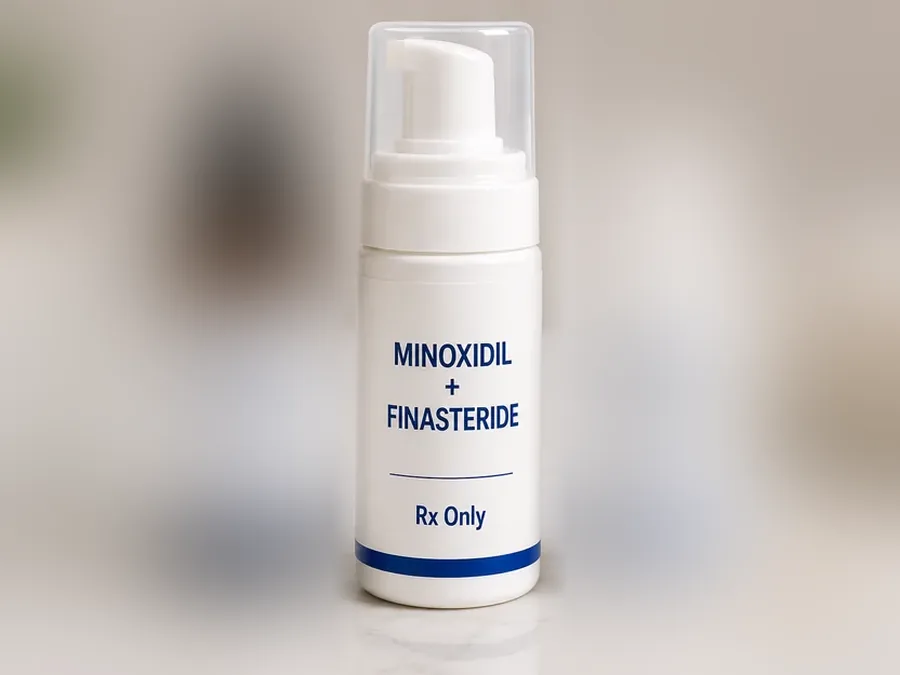
Topical Minoxidil + Finasteride
Two prescription medications in one topical foam applied to the scalp: minoxidil supports blood flow to hair follicles, and finasteride lowers DHT. Your provider decides whether it is appropriate for you.
- Minoxidil 6% + Finasteride 0.3%
- Topical Foam
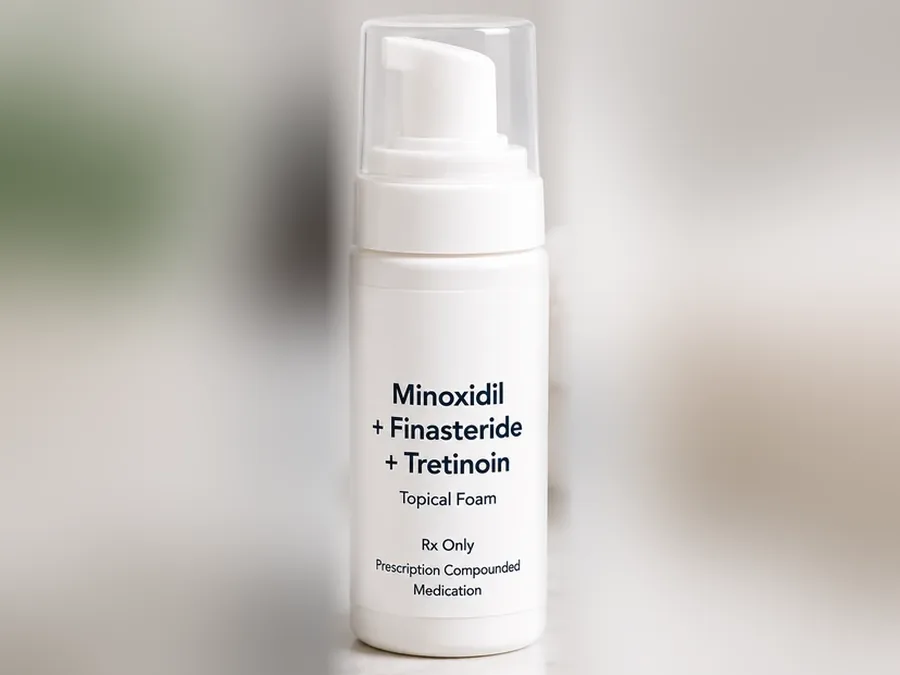
Topical Finasteride + Minoxidil + Tretinoin
Three prescription medications in one topical foam applied to the scalp: minoxidil supports blood flow to hair follicles, finasteride lowers DHT, and tretinoin, a retinoid, speeds skin-cell turnover. Your provider decides whether it is appropriate and which strength fits you.
- Finasteride 0.25% + Minoxidil 5% + Tretinoin 0.03%
- Finasteride 0.25% + Minoxidil 5% + Tretinoin 0.01%
- Finasteride 0.5% + Minoxidil 5% + Tretinoin 0.01%
- Topical Foam
Key Takeaways
- Male pattern baldness is the most common cause of hair loss in men.
- Genetics and sensitivity to DHT are major contributing factors.
- Hair loss usually develops gradually over several years.
- Other medical conditions may also contribute to thinning hair.
- Early evaluation may provide more treatment options before hair loss progresses.